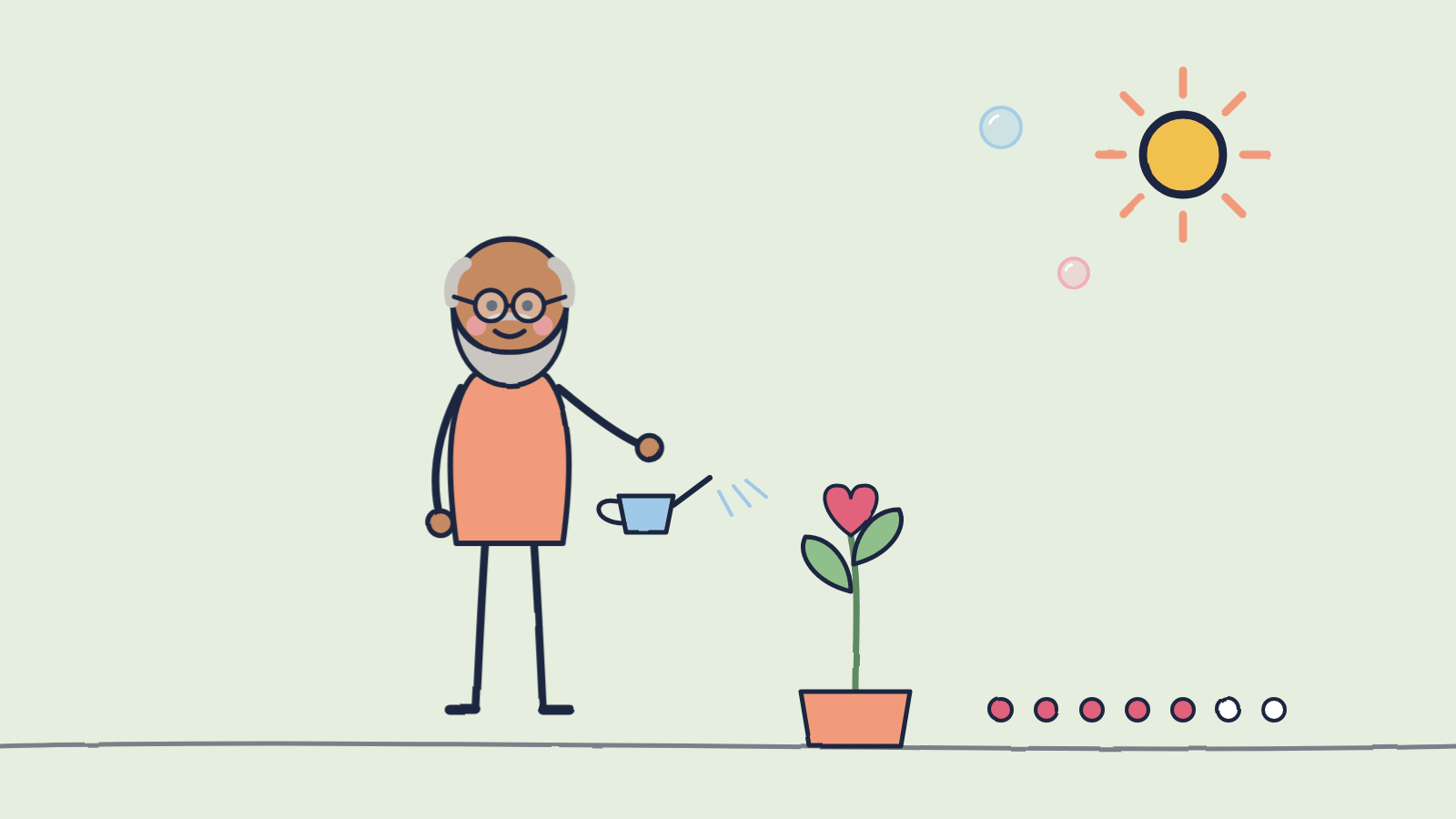
Draw It to Remember It: Why Doodles and Handwriting Stick
Drawing a word helps you remember it better than writing it, even if you can't draw. Here is the science of doodles, handwriting and memory.
Leo found the notebook in a box under his bed. It was from a summer trip, three years ago. Most of the pages were short typed notes he had printed out, and honestly, he did not remember much from reading them. But on one page he had drawn a lopsided sailboat, a sun with too many rays, and a stick figure eating what was supposed to be an ice cream cone. The moment he saw it, the whole afternoon came back: the salty wind, the melting cone, his friend laughing at him for dropping half of it in the sand. The drawing was terrible. The memory was perfect.

Leo’s story is made up, but plenty of people have had a moment like it. There is a reason a scribble can hold a memory better than a neat paragraph. Researchers have studied it, and the results are good news for anyone who thinks they “can’t draw.”
The Drawing Effect
In 2016, Jeffrey Wammes, Melissa Meade and Myra Fernandes published a series of experiments in the Quarterly Journal of Experimental Psychology. Their question was simple: if you want to remember a word, does it help more to draw it or to write it out?
Participants were shown lists of simple words. For some words, they drew a picture of the word. For others, they wrote the word out. Later, they were asked to recall as many words as they could, without any hints.
Drawing won. People remembered the words they had drawn better than the words they had written. The researchers called this the “drawing effect,” and they found it to be reliable and robust across their experiments.
Here is the part that should make every self-described bad artist smile: the quality of the drawing did not matter. A rough sketch helped just as much as a careful one. It is not about making art. It is about the act of drawing itself.
Why Drawing Helps Memory
Why would a quick doodle beat writing a word out? One way to think about it is that drawing asks more of you. To draw something, you have to picture it in your mind, decide what it looks like, and then move your hand to make it. You are thinking about meaning, seeing an image, and using your body all at once. That gives your memory more than one hook to hang on.
Writing a word out, by comparison, can happen almost on autopilot. You can copy a word without really thinking about what it means.
Handwriting and the Brain
Drawing is not the only way the hand seems to matter. In 2024, Van der Weel and Van der Meer published a study in Frontiers in Psychology that used high-density EEG, a method that records brain activity through sensors on the scalp, to compare writing by hand with typing.
They studied young adults and found that when people wrote by hand, their brains showed more widespread connectivity across different regions than when they typed. In simple terms, more parts of the brain seemed to be talking to each other during handwriting.
The researchers connected this to learning, since connected brain activity is often linked to how we take in and hold on to information. This was one study with young adults, and it measured brain activity rather than memory directly, so it is best seen as a clue rather than a final answer. But it fits nicely with the drawing research: when your hand is shaping something, your brain seems to be more fully involved.
What This Means for a Journal
If you keep a gratitude journal, these findings offer a gentle suggestion. Typing a quick line is fine, and much better than nothing. But if you want a moment to stick, try adding a little drawing, or writing it out by hand.
A doodle of the coffee mug your friend gave you. A wobbly heart next to a name. A few words in your own handwriting. These small touches may help you remember not just what you were grateful for, but how it felt.
And remember the most freeing finding of all: it does not need to look good. A page full of messy sketches is still doing its job.
Try It Tonight
- Pick one good moment from today. Keep it small and specific, like a conversation, a meal, or a quiet minute outside.
- Draw one thing from it. Give yourself thirty seconds. A stick figure, a cup, a sun. Ugly is allowed, and actually encouraged.
- Write a line by hand. Next to your drawing, write a short sentence about why it mattered. Use a pen, a pencil, or a stylus.
A Page You Drew Is a Page You Remember
Leo started drawing in his journal again after that. Not well, but often.
In NOTETYPE, you can write by hand with a stylus, sketch in Draw mode and watch rough shapes turn into finished drawings, or press “Make it real” to have doodles appear around your words. However you add them, a page you drew is a page you are more likely to remember.
Sources
- Van der Weel, F. R., & Van der Meer, A. L. H. (2024). Handwriting but not typewriting leads to widespread brain connectivity: A high-density EEG study with implications for the classroom. Frontiers in Psychology, 14, 1219945.
- Wammes, J. D., Meade, M. E., & Fernandes, M. A. (2016). The drawing effect: Evidence for reliable and robust memory benefits in free recall. Quarterly Journal of Experimental Psychology, 69(9), 1752–1776.