Name It to Tame It: Why Tagging Your Feelings Helps
Putting a feeling into words may calm the brain's alarm system. Here is what affect labeling research shows and how to use it each day.
Sam came home from a long day and snapped at her roommate over a pile of dishes. Afterward, sitting on her bed, she felt off but could not say why. Was she angry? Tired? Something else? She grabbed a notebook and wrote one word at the top of the page: “frustrated.” Then, a line below: “Actually, more like left out.” Her coworkers had gone to lunch without her. Just seeing it written down made the feeling smaller and easier to hold.
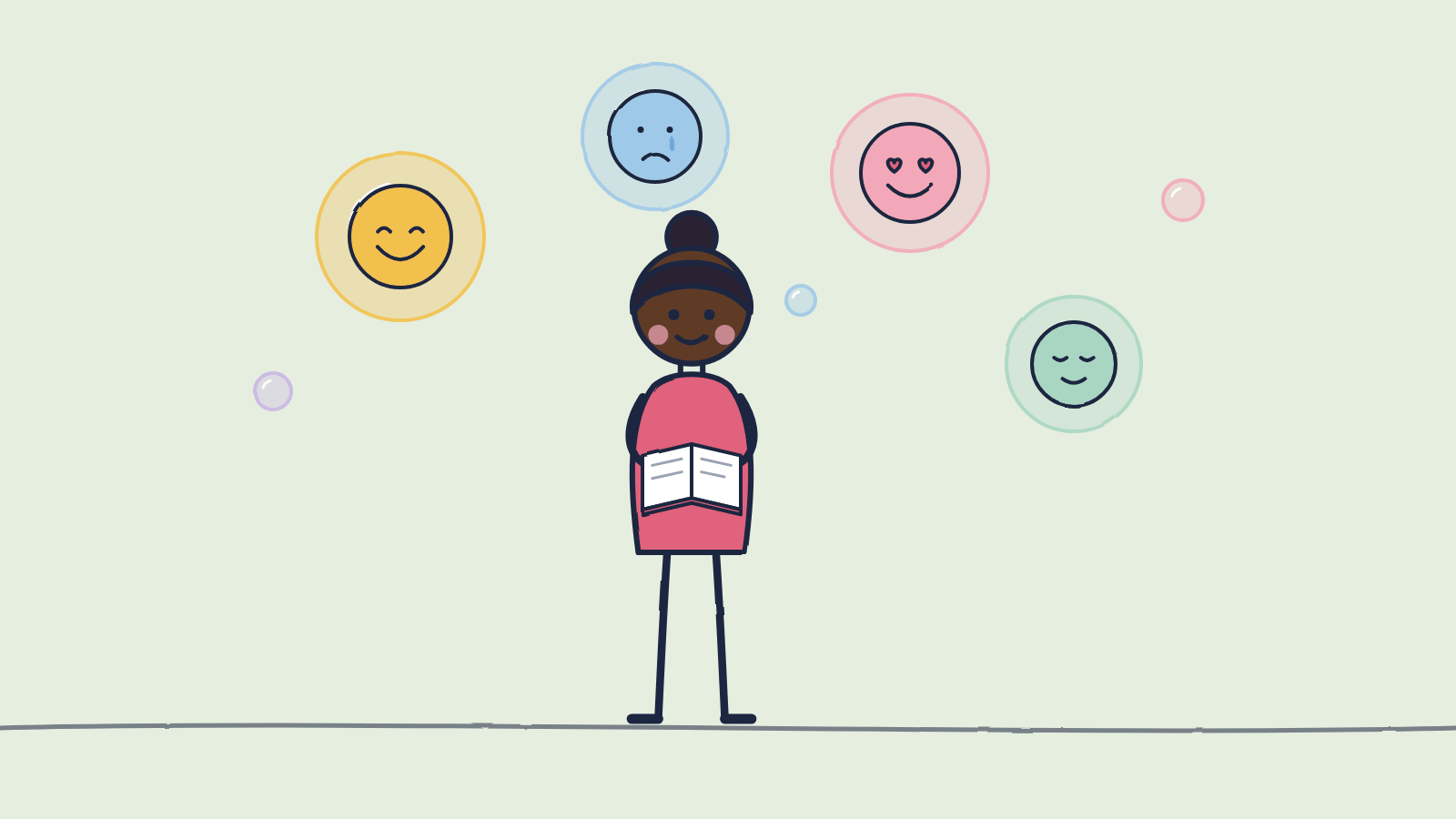
Sam stumbled onto something that brain researchers have actually measured. Sometimes, simply naming a feeling helps.
A study inside the brain
In 2007, a team led by psychologist Matthew Lieberman published a study called “Putting Feelings Into Words.” They used brain scans to see what happens when people label emotions.
Participants looked at images with emotional content. During some tasks, they chose a word that named the emotion shown in the image. During other tasks, they did something different with the same kinds of images, something that did not involve naming the feeling.
The researchers paid close attention to the amygdala. This is a small part of the brain that is closely tied to emotional reactions, especially to things that feel threatening. You can think of it as part of the brain’s alarm system.
Here is what they found. When people labeled the emotion in an image, their amygdala responded less than it did during the other tasks. At the same time, a region called the right ventrolateral prefrontal cortex became more active. That is a mouthful, but you can think of it as an area toward the front of the brain linked to thinking and regulating our responses.
The researchers called this “affect labeling.” Affect is just a scientific word for emotion. Put simply, putting a feeling into words seemed to turn down the alarm a little while turning up a part of the brain involved in managing it.
Why this matters in everyday life
You might not be lying in a brain scanner when you feel upset. But the idea carries over in a useful way. When a feeling is just a fuzzy cloud, it can be hard to deal with. Giving it a name turns it into something more specific. Instead of “I feel bad,” you can say “I feel frustrated” or “I feel left out.”
That shift does not make the feeling vanish. Sam was still a bit hurt. But naming it gave her some distance and a clearer next step. She could talk to her coworkers, or simply let herself feel it without snapping at anyone.
It is worth being honest here. This research tells us something interesting about how the brain responds in the moment, and the effect is real but modest. Naming a feeling is a small tool, not a fix for everything. It is not a treatment for anxiety or depression, and it does not replace care from a doctor or therapist. If your feelings are overwhelming, please reach out to someone you trust or a professional.
Seeing patterns over time
Labeling a single feeling can help in the moment. Labeling feelings again and again can help in another way: it creates a record.
When you look back over a few weeks, you might notice that you feel calm on days you go outside, or that frustration tends to show up on Mondays. These patterns are easy to miss when you are living through them one day at a time. A simple record of how you felt gives you a point of reference, something to look back on when you want to understand yourself a little better.
Try it tonight
- Pause and ask, “What am I feeling?” Take a breath and try to find a word for it. If the first word is vague, like “bad,” see if a more specific one fits.
- Write the word down. Put it at the top of your page or next to your entry. One word is enough. Two is fine if your feelings are mixed.
- Look back once a month. At the end of the month, read through your feeling words. Notice which ones showed up most, and when.
There are no wrong answers. Feeling sad or frustrated is just as worth naming as feeling happy or grateful.
A word for every page
Sam kept writing a feeling word at the top of her pages. A month later, she could see how often “calm” showed up after weekend walks. In NOTETYPE, you can tag each page with an emotion emoji, from grateful and loved to sad and frustrated, and your “Your month” view gathers them into a summary of how you felt over time.
Sources
- Lieberman, M. D., Eisenberger, N. I., Crockett, M. J., Tom, S. M., Pfeifer, J. H., & Way, B. M. (2007). Putting feelings into words: Affect labeling disrupts amygdala activity in response to affective stimuli. Psychological Science, 18(5), 421–428.